




The stage is set for a historic showdown at the 2026 FIFA U-17 Women's World Cup as Nigeria's Flamingos prepare to take on Japan in Saturday's final in Rabat, Morocco.
After weeks of exciting football, surprising results and outstanding individual performances, the tournament has reached its biggest moment. Two teams from different footballing cultures will compete for the ultimate prize, with Nigeria seeking its first-ever title and Japan hoping to add another trophy to its impressive history in the competition.
For Nigeria, however, this is about more than winning a football match. It is an opportunity to make history, put African women's football firmly on the global map and inspire another generation of young girls to pursue their football dreams.
The final will take place on Saturday, November 7, at the Mohammed VI Football Complex in Rabat, with kick-off scheduled for 6:30 pm local time (6:30 pm Nigerian time).
Nigeria's Flamingos: From Opening-Day Disappointment to World Cup Finalists
Nigeria's journey to the final has been one of determination, resilience and remarkable improvement.
The Flamingos did not enjoy the perfect start to their campaign, losing 2-1 to Poland in their opening Group B encounter. The defeat immediately placed pressure on the young Nigerian side, but rather than allowing the setback to derail their ambitions, the players responded with impressive character.
They recovered with a 2-0 victory over Puerto Rico before producing one of the tournament's biggest surprises by defeating defending champions DPR Korea 3-1.
That victory was particularly significant. DPR Korea arrived in Morocco as one of the most respected teams in youth women's football, having won the previous two editions of the competition. Nigeria's victory demonstrated that the Flamingos had the quality and confidence to compete with the very best.
Their momentum continued into the knockout stages.
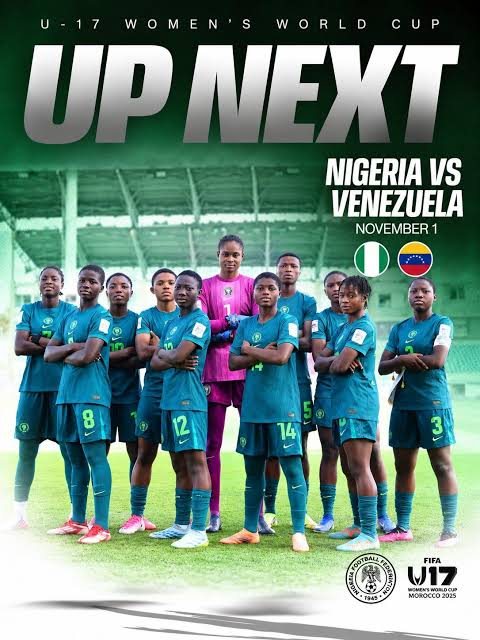
Nigeria defeated Mexico 2-1 in the Round of 16 before overcoming Venezuela 1-0 in the quarter-finals through an 89th-minute penalty converted by Azeezat Oduntan.
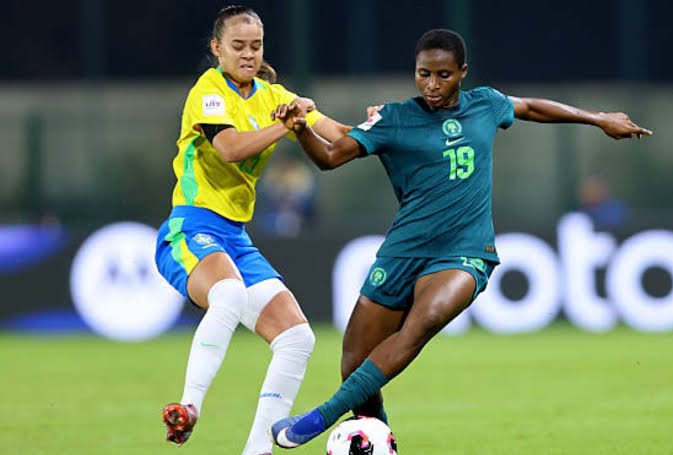
The semi-final against Brazil proved to be another defining moment.
The South Americans entered the contest with an impressive attacking record, but Nigeria delivered a commanding performance to secure a 3-1 victory and book their first-ever appearance in the FIFA U-17 Women's World Cup final.
The Flamingos have now won five consecutive matches since their opening-day defeat, a remarkable turnaround that reflects the team's mental strength and growing confidence.
Japan: A Familiar Name Returns to the Final
While Nigeria are preparing for their first appearance in the final, Japan arrive with considerable experience at this level.
The Japanese have established themselves as one of the leading nations in youth women's football, combining technical ability, tactical discipline and excellent player development.
They have participated in every edition of the FIFA U-17 Women's World Cup and have previously reached the final three times.
Their first final appearance came in 2010, followed by another in 2014, when they defeated Spain 2-0 to become world champions. They returned to the final in 2016 but finished as runners-up.
Now, ten years after their last appearance in the championship match, Japan are back with another opportunity to lift the trophy.
Under head coach Sadayoshi Shirai, the Japanese team have impressed throughout the Morocco tournament.
Their group-stage campaign was particularly impressive, as they won all three matches without conceding a goal.
Japan defeated Zambia 5-0, France 2-0 and Venezuela 2-0 to establish themselves as serious contenders.
They subsequently defeated Kenya 3-1 in the Round of 16 and Ghana 1-0 in the quarter-finals.
Their biggest examination came against defending champions DPR Korea in the semi-finals.
Japan appeared to be heading towards elimination after conceding in the 52nd minute. However, an own goal in the 90th minute of stoppage time brought them level.
The match eventually went to penalties, where Japan prevailed 4-1 to secure their place in the final.
That comeback demonstrated the Japanese team's ability to remain composed under pressure, a quality that could prove important against Nigeria.
Head-to-Head: Nigeria vs Japan
One of the most interesting aspects of Saturday's final is that Nigeria and Japan have never previously met at the FIFA U-17 Women's World Cup.
This means there is no previous direct World Cup head-to-head record between the two countries.
Their meeting in Rabat will therefore be the first opportunity to establish a competitive history at this level.
However, their historical achievements in the competition provide an interesting comparison.
| Tournament record | Japan | Nigeria |
|---|---|---|
| Previous World Cup titles | 1 | 0 |
| Previous final appearances | 3 | 0 |
| Previous runners-up finishes | 2 | 0 |
| Best previous finish | Champions (2014) | Third place (2022) |
| Participation in 2026 final | Fourth final | First final |
| Previous World Cup meetings | 0 | 0 |
Japan clearly have greater experience of competing at the highest stage of this competition. Their title-winning campaign in 2014 remains one of the defining achievements in the country's youth football history.
Nigeria, meanwhile, have steadily improved their performances over the years. Their bronze-medal finish in India in 2022 represented their previous best achievement.
The 2026 campaign has already surpassed that accomplishment.
Saturday's final will give the Flamingos an opportunity to take another historic step by becoming the first African nation to win the FIFA U-17 Women's World Cup.
Importantly, the absence of previous meetings means neither side can rely on an established direct rivalry. Both coaches must concentrate on the strengths and weaknesses displayed by the current generation of players.
Tournament Statistics: How Do the Finalists Compare?
The numbers provide an interesting picture of the two teams' journeys to the final.
According to FIFA's official tournament statistics published ahead of the final, both countries have won five consecutive matches during the competition.
Japan have been particularly impressive defensively, conceding just twice on their way to the championship match.
Nigeria, on the other hand, have demonstrated considerable attacking ambition and variety.
Key statistical comparison
| Statistical category | Japan | Nigeria |
|---|---|---|
| Consecutive victories | 5 | 5 |
| Goals conceded | 2 | More than Japan |
| Shots on goal attempts | — | 113 |
| Different goalscorers | — | 8 |
| Previous tournament titles | 1 | 0 |
| Previous final appearances | 3 | 0 |
One of Nigeria's most impressive statistics is the number of different players contributing goals.
Eight different Flamingos have found the net in Morocco, highlighting the team's attacking depth and reducing its dependence on a single goalscorer.
FIFA also reported that Nigeria had registered 113 attempts on goal, the second-highest total in the tournament at the time of its pre-final statistical review.
Japan, meanwhile, have demonstrated extraordinary consistency at this level. Their 150th goal in the history of the competition came during their dramatic semi-final against DPR Korea.
The statistics reveal two different approaches to success: Japan's defensive organisation and Nigeria's attacking ambition.
Saturday's encounter will test which qualities can make the difference.
Players to Watch: The Young Stars Who Could Decide the Final
Individual brilliance often determines the outcome of major finals, and both countries possess players capable of producing decisive moments.
Nigeria
1. Queen Joseph
Queen Joseph has been one of Nigeria's exciting attacking players throughout the tournament.
Her pace, movement and ability to create opportunities make her an important part of the Flamingos' attacking system.
She delivered an outstanding performance against Brazil in the semi-final, scoring a goal and providing an assist.
Her ability to attack spaces and trouble opposing defenders could be particularly important against Japan's organised backline.
2. Awawu Bashiru
Bashiru has emerged as one of the major talking points of Nigeria's campaign.
She had played only 73 minutes in the tournament before the semi-final against Brazil, but her introduction proved decisive.
The forward scored twice in Nigeria's 3-1 victory and was named Player of the Match.
Her performance demonstrated the importance of squad depth and the ability of substitutes to change the direction of important matches.
She could once again provide Nigeria with an important attacking option.
3. Azeezat Oduntan
Oduntan has also contributed important moments during Nigeria's campaign.
Her late penalty against Venezuela secured the Flamingos' place in the semi-finals, demonstrating her composure in a high-pressure situation.
Her contribution could be important if Saturday's final becomes a closely contested encounter.
Japan
1. Mei Hanashiro
Hanashiro is one of Japan's most important attacking threats.
She has scored four goals at Morocco 2026 and has also contributed an assist.
Her combination of pace, strength and composure in front of goal makes her a player Nigeria's defenders will need to monitor carefully.
2. Honoka Yotsumoto
Japan's captain, Yotsumoto, provides leadership and organisation within the team.
Her experience in guiding the young Japanese players through difficult moments will be valuable in a final where concentration and composure will be essential.
3. Kou Kadowaki
Japan's goalkeeper has already demonstrated her importance to the team.
Her performance during the semi-final penalty shootout against DPR Korea helped secure Japan's place in the final.
If Nigeria manage to create several clear opportunities, her ability to make important saves could become a decisive factor.
Tactical Battle: Nigeria's Attacking Strength Against Japan's Organisation
Saturday's final promises an intriguing tactical contest.
Nigeria have demonstrated their ability to play with attacking intensity, put opponents under pressure and create numerous opportunities in the final third.
Their 35 attempts against Brazil in the semi-final illustrate how effectively they can take the game to an opponent.
However, Japan present a different kind of challenge.
The Japanese are comfortable building attacks through possession, using intelligent movement and creating passing combinations to open up opposing defences.
Their defensive organisation has also been one of their greatest strengths.
For Nigeria, the midfield battle will be particularly important.
The Flamingos must prevent Japan from establishing complete control of possession while remaining disciplined enough to avoid leaving spaces behind their defensive line.
They will also need to make their attacking opportunities count.
Against a team that has conceded only twice throughout the tournament, wasting clear chances could prove costly.
Japan, meanwhile, must be prepared for Nigeria's physical intensity, attacking pace and willingness to commit players forward.
The Japanese defence will need to remain organised, particularly when dealing with Queen Joseph's movement and the attacking threat provided by Nigeria's substitutes.
The battle between Nigeria's attacking creativity and Japan's defensive discipline could ultimately shape the outcome.
A Historic Opportunity for African Women's Football
Regardless of Saturday's result, Nigeria have already achieved something extraordinary.
The Flamingos are the first African team to reach the final of the FIFA U-17 Women's World Cup.
Previous African achievements include Ghana's bronze-medal finish in 2012 and Nigeria's own third-place finish in 2022.
However, neither country had previously reached the championship match.
This makes the 2026 campaign particularly significant for African football.
Nigeria's success also provides an important platform for discussions about investment in women's football, grassroots development, coaching and opportunities for young female players.
The Flamingos have shown that African teams can compete with established football nations when given the right preparation, support and opportunities.
A victory over Japan would take that message even further.
It would make Nigeria the first African nation to lift the FIFA U-17 Women's World Cup trophy.
It would also provide another major milestone for the development of women's football across the continent.
Match Information: Japan vs Nigeria
| Match detail | Information |
|---|---|
| Competition | FIFA U-17 Women's World Cup 2026 |
| Fixture | Japan vs Nigeria |
| Date | Saturday, 7 November 2026 |
| Kick-off | 6:30 pm |
| Nigerian time | 6:30 pm WAT |
| Venue | Mohammed VI Football Complex, Rabat |
| Match | Final |
| At stake | FIFA U-17 Women's World Cup trophy |
The third-place match between DPR Korea and Brazil will take place earlier on Saturday at 3:00 pm local time.
Final Verdict: Can the Flamingos Complete the Dream?
Japan enter the final with a richer history in the competition, impressive defensive statistics and the confidence of a team that knows what it takes to become world champions.
Nigeria, however, have demonstrated tremendous resilience, attacking quality and an ability to overcome difficult opponents.
The Flamingos have already defeated defending champions DPR Korea and eliminated Brazil to reach this stage.
They will not be intimidated by Japan's reputation.
For head coach Akeem Busari and his players, the objective is now straightforward: produce one more outstanding performance and bring the trophy home.
The challenge will be demanding, but the opportunity is enormous.
For millions of Nigerians and football fans across Africa, Saturday represents a moment of pride, hope and anticipation.
The Flamingos have already made history. Now they have the opportunity to make it unforgettable.
One match. One trophy. One chance to make Africa world champions.
Come Saturday evening, the football world will be watching as Nigeria and Japan battle for the ultimate prize in youth women's football.


Comments (0)
No comments yet — be the first to share your thoughts.